A structured evidence programme to standardise priority hazards, site characteristics, control practices and intervention options across artisanal mining sites.
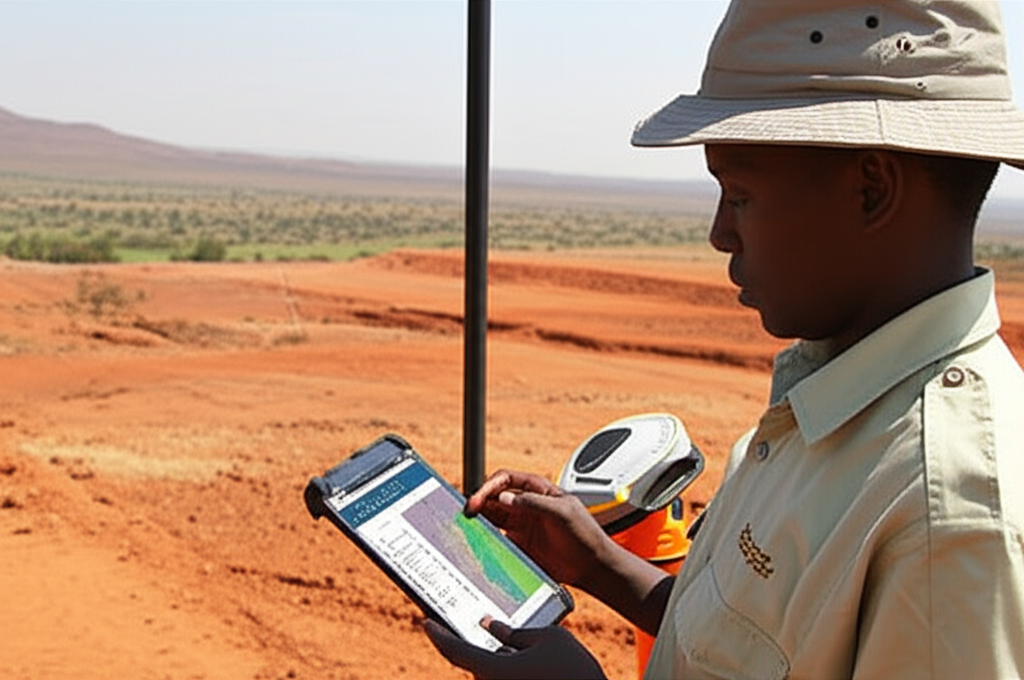
Information flow
Three stages: synthesising what is known, organising it for decisions, and delivering it where action happens.
Stage 1
Scoping reviews, evidence maps and field observations synthesised into standardised hazard definitions and classification criteria.
Stage 2
A structured hazard register connecting each hazard with tasks, exposed groups, site characteristics and evidence-supported intervention options.
Stage 3
ORI — MHN's emerging demonstration environment for organising site-level risk information into cooperative action, programme monitoring and institutional decision-making.
Stage 3
ORI is MHN's emerging demonstration environment for organising site-level risk information. It is intended to show how structured field observations can support cooperative action, programme monitoring and institutional decision-making.
ORI should be presented as a demonstration capability until data governance, validation and deployment arrangements are complete.
Register structure
Every hazard in the register is documented across six structured dimensions — enabling decision-ready, site-specific guidance.
01 — Hazard
Standardised definition and classification of the priority hazard
02 — Tasks
The mining activities that generate or amplify the hazard
03 — Exposed groups
Workers and community members potentially affected
04 — Site characteristics
Factors affecting which controls are feasible at a given site
05 — Observed controls
Current practices documented and reviewed across sites
06 — Intervention options
Evidence-supported actions with implementation indicators for follow-up
Programme development
Scoping reviews and evidence maps on priority occupational-health hazards in artisanal and small-scale mining — silica dust, hazardous noise and key mine-safety hazards.
Developing standard hazard definitions, classification criteria and site-characteristic fields so that future data collection serves clearly defined decisions rather than duplicating existing studies.
Connecting each hazard with tasks, exposed groups, site characteristics, observed controls and intervention options in a structured, queryable format.
Field review with cooperative representatives and technical specialists to ensure register entries reflect real mining conditions and are actionable at site level.
Developing MHN's demonstration environment for organising site-level risk information — showing how structured field observations can support cooperative action and institutional decision-making.
Publishing aggregated findings, programme-level recommendations and learning that can inform county and national occupational-health and mine-safety policy.

Core components
Scoping reviews and evidence maps
Standard hazard definitions and classifications
Site-characteristic and control-practice fields
Cooperative and technical validation
Decision rules for prioritising action
Anonymised dashboards and programme reporting
Policy and scale-up learning