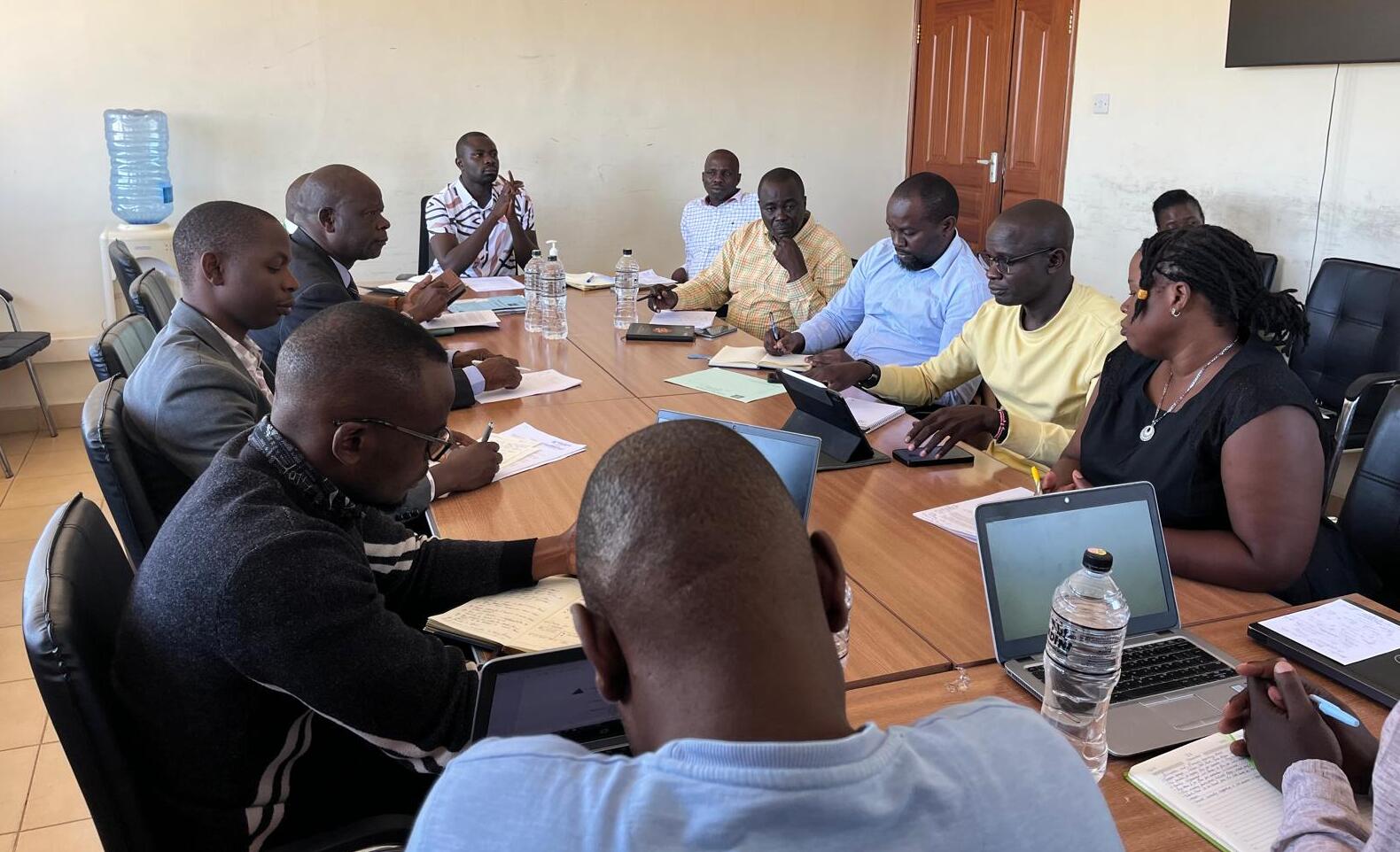
Stakeholders co-develop a roadmap to assess OSH conditions, environmental health impacts, and WASH standards in ASM communities—laying the groundwork for long-term monitoring and policy action.
Migori County, 22 March 2025

Artisanal and small-scale mining supports livelihoods and local economies, but workers can face serious and preventable hazards.
The risks are interconnected, but solutions must work at site level. MHN helps cooperatives and institutions identify what matters most, select feasible controls and follow through on implementation.
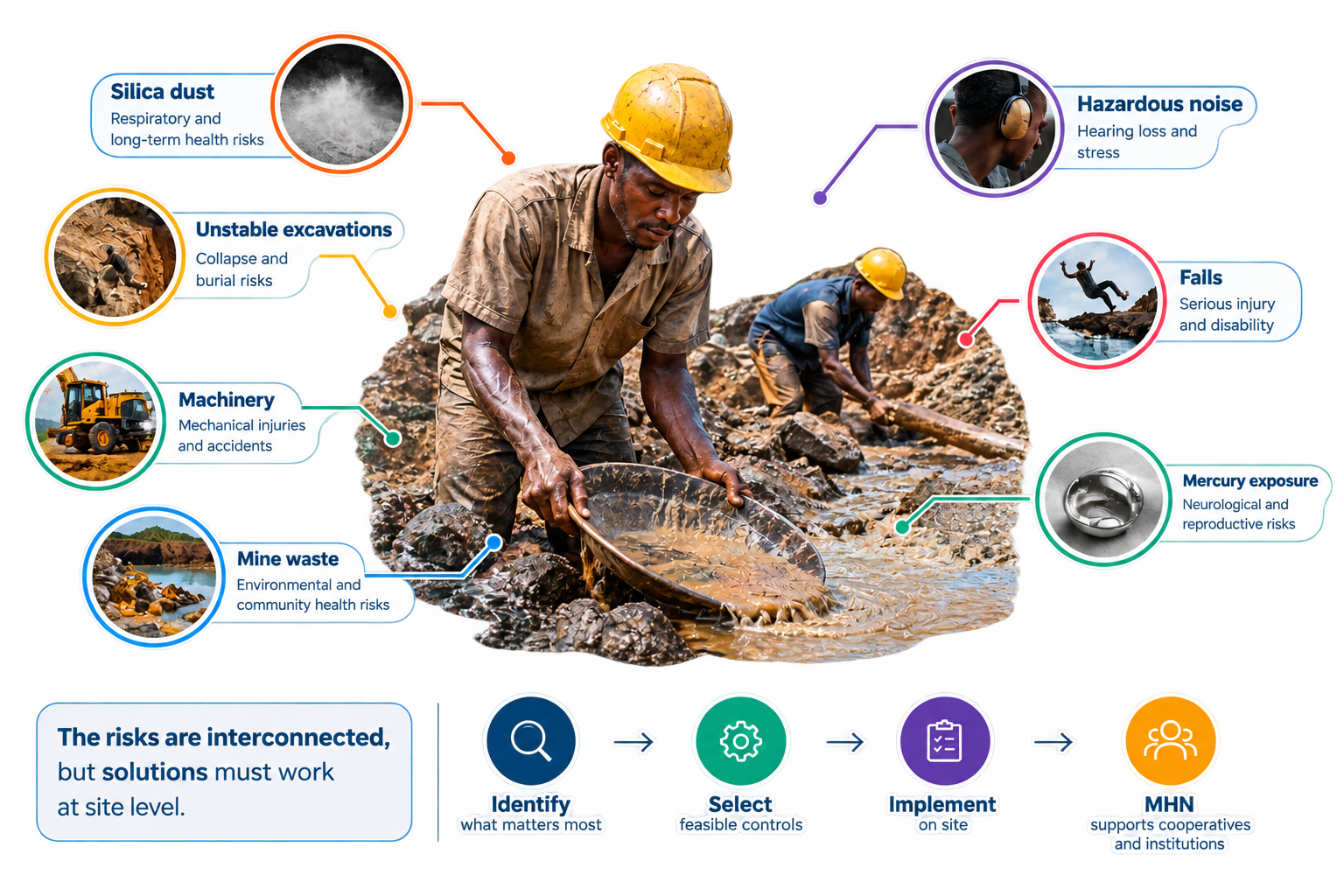
We document how miners are exposed to hazards such as silica dust and excessive noise, assess existing control practices and support feasible engineering and work-practice improvements.
We work with cooperatives and qualified technical specialists to identify structural and operational hazards, prioritise high-risk conditions and recommend practical measures to prevent collapses, injuries and fatalities.
We equip cooperative trainers and miners to recognise hazards, apply controls, communicate risks and monitor whether improvements are being sustained.
We organise field evidence into hazard registers, dashboards, technical reports and policy recommendations that help cooperatives and public institutions direct action where it is most needed.
Engage miners and cooperative leaders and document how work is organised at each site.
Identify hazards, affected workers, existing controls and the risks requiring early action.
Develop practical responses with miners, occupational-health professionals and engineering specialists.
Prepare cooperative trainers and miners to apply, maintain and improve the controls.
Track implementation, share learning and convert site evidence into institutional recommendations.
Engage miners and cooperative leaders and document how work is organised at each site.
Identify hazards, affected workers, existing controls and the risks requiring early action.
Develop practical responses with miners, occupational-health professionals and engineering specialists.
Prepare cooperative trainers and miners to apply, maintain and improve the controls.
Track implementation, share learning and convert site evidence into institutional recommendations.
MHN is working from an initial base in Migori County to develop credible, cooperative-centred models for occupational-health and mine-safety action.
Convened an interdepartmental stakeholder plenary in Migori County on 22 March 2025.
Engaged mining cooperatives in defining site-level health and safety priorities.
Selected silica dust and hazardous noise as initial occupational-hygiene priorities.
Developed a cooperative trainer and miner capacity-building model.
Initiated development of an ASM hazard register and site-risk intelligence approach.
Advanced concepts for practical dust control and cooperative-led mine-safety inspections.