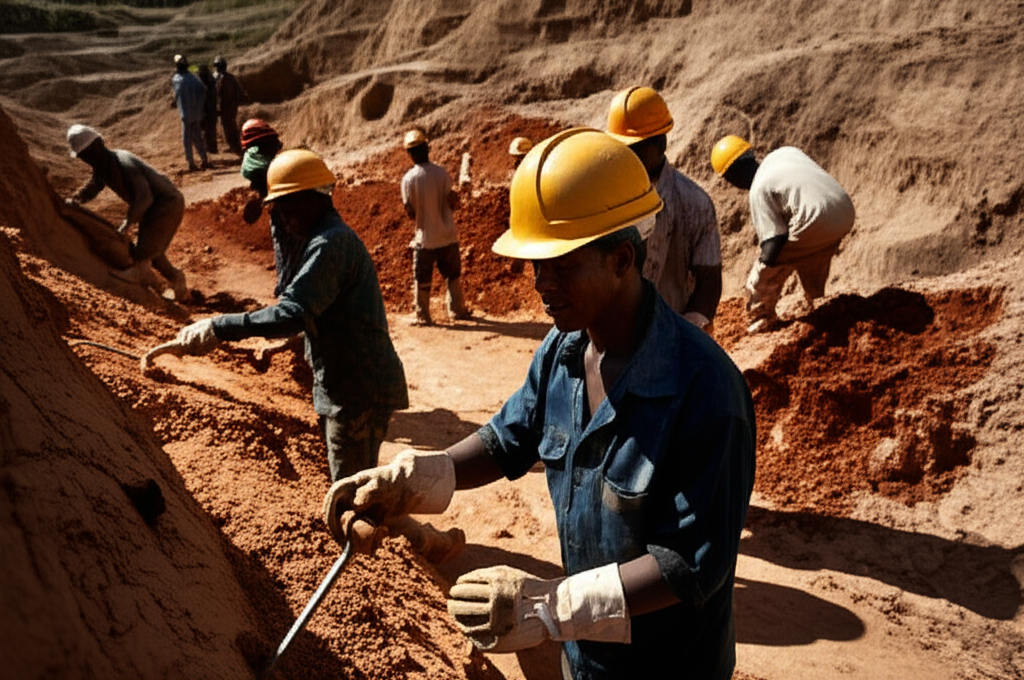
A cooperative-based programme to reduce exposure to silica dust through hazard recognition, miner training and practical dust-control measures.
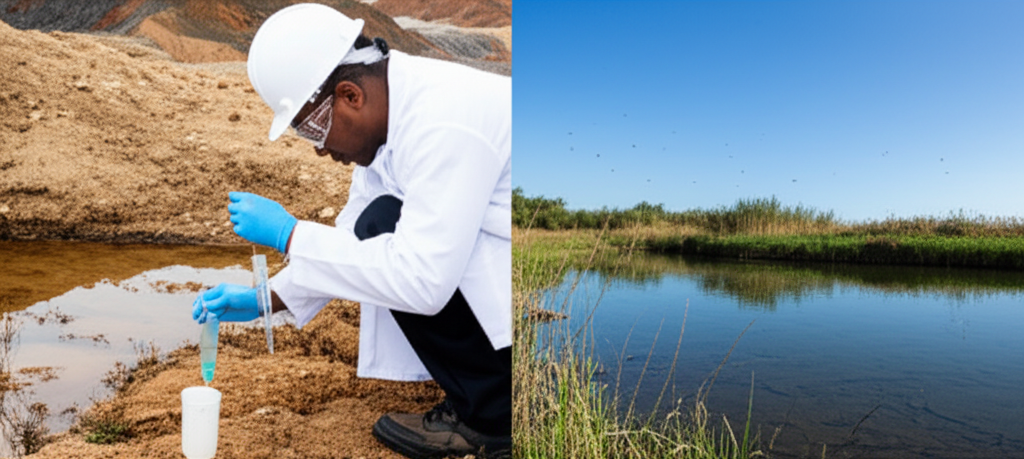
Programme pathway
Silica-laden dust from drilling, crushing and grinding — invisible, respirable and silicogenic.
MHN Safer Air Programme
Trained cooperatives, practical controls in place and a system for ongoing follow-up and verification.
How it works
Drilling, crushing, grinding and dry ore handling generate respirable silica dust. Without controls, miners inhale particles causing silicosis, other respiratory disease and elevated TB risk.
MHN trains cooperative trainers and miners to identify dust-generating tasks, understand silica-related health risks, and document site characteristics that determine which controls will work.
Practical engineering and work-practice controls are selected with cooperatives — using site observations, occupational-hygiene expertise and locally available resources. Dust capture, water mist and process changes are evaluated.
Controls are demonstrated and installed with cooperative support. Maintenance and supervision routines are established to ensure controls stay effective over time.
Participating cooperatives have trained local personnel, documented priority tasks, operational controls and follow-up systems. Claims of exposure reduction made only where supported by appropriate measurement.
Planned activities
Prepare 6–8 cooperative trainers through a focused 4–6 hour training-of-trainers programme.
Deliver 90–120 minute practical learning sessions intended to reach more than 100 miners during the first year.
Document dust-generating tasks, existing control practices and site characteristics relevant to control selection.
Demonstrate feasible dust-reduction measures and maintenance practices.
Advance technical development and field evaluation of a low-cost electrostatic and low-flow water-mist dust-control concept, subject to safety and technical review.
Track training delivery, control adoption, maintenance and implementation barriers.
Expected outputs
Trainer and miner learning materials
Site observation and control-selection tool
Documented site-specific recommendations
Training and implementation records
Technical learning note on feasible dust-control options
Recommendations for expansion to additional cooperatives
What success looks like
Participating cooperatives will have trained local personnel, clearer knowledge of silica-dust risks, documented priority tasks, practical control actions and a system for following up implementation. Any claims of exposure reduction will be made only where supported by appropriate measurement and technical interpretation.